
Project description
The challenge
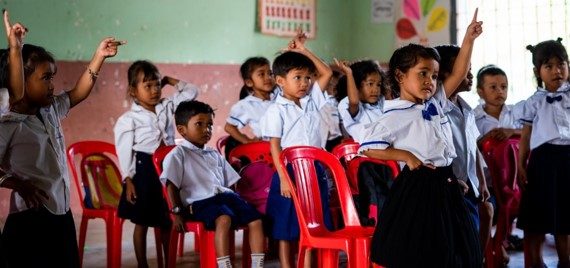
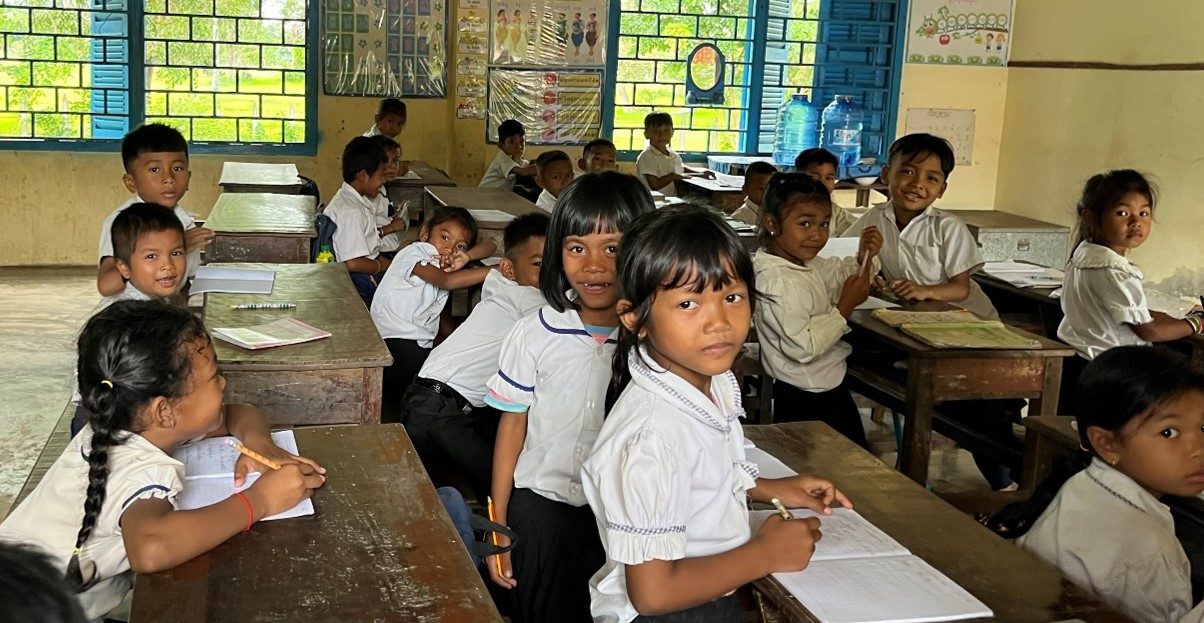
For many children in rural Cambodia, the school day ends after just three to four hours of teaching. Subjects such as English, sports and creative learning are rarely part of their daily education. For families living in poverty, education also competes with the immediate need for children to help at home or in the fields. Yet parents understand that education can offer their children a different future. English is particularly important. In nearby Siem Reap, tourism creates real employment opportunities – but without English skills, many young people are excluded from them.
Our solution
We are establishing an Afternoon School for around 250 children, giving them more time to learn and develop skills beyond the regular public-school curriculum. The two-year program combines e.g. additional English teaching with teacher training, learning materials and activities, support for particularly vulnerable children and ongoing impact measurement. The ambition is not to create a parallel school, but to strengthen the existing public school and its teachers, so that better learning can continue beyond the project itself. The plan is for the school to take full ownership and continue the program independently after the project period. If more time is needed to achieve this, BAMBOOS guarantees to continue the program and cover the associated costs for as long as needed.
The impact
Key focus will be on strengthening the students English skills and giving them greater confidence and opportunities for the future. At the same time, teachers will strengthen their skills and teaching methods, creating an impact that can reach new generations of students long after the initial project period. Ultimately, the goal is simple: to help more children gain the education and skills they need to continue learning, access better jobs and build a more self-reliant future.
Made possible by
The project is made possible by Fonden Sol og Strand ved Margit og Kjeld, funding the Afternoon School for two years. It is an investment not only in 250 children today, but in the school’s ability to provide stronger education in the future.